
Better healthcare design starts with better healthcare decisions.
Healthcare projects are becoming too operationally, clinically, and financially complex for traditional planning processes alone.
Amplara Advisors helps healthcare design teams pressure-test assumptions, align strategy with operations, and solve the problems that determine whether projects ultimately succeed or struggle after opening.
The reality.
Most healthcare projects that struggle do not fail because of bad design.
They struggle because the underlying assumptions were never fully challenged in the first place.
Operational models.
Staffing assumptions.
Patient flow.
Technology integration.
Future growth.
Care delivery models.
Financial sustainability.
Too often, projects are built around inherited ways of functioning instead of asking a harder question:
Is this actually the best way forward?
As healthcare becomes more constrained, consumer-driven, workforce-limited, and operationally complex, that question matters more than ever.
Better projects begin with a clearer definition of success.
Most healthcare projects fail because stakeholders never fully align on what matters most, what tradeoffs are acceptable, and how success will actually be measured.
Amplara Advisors helps teams structure those conversations before assumptions become buildings.
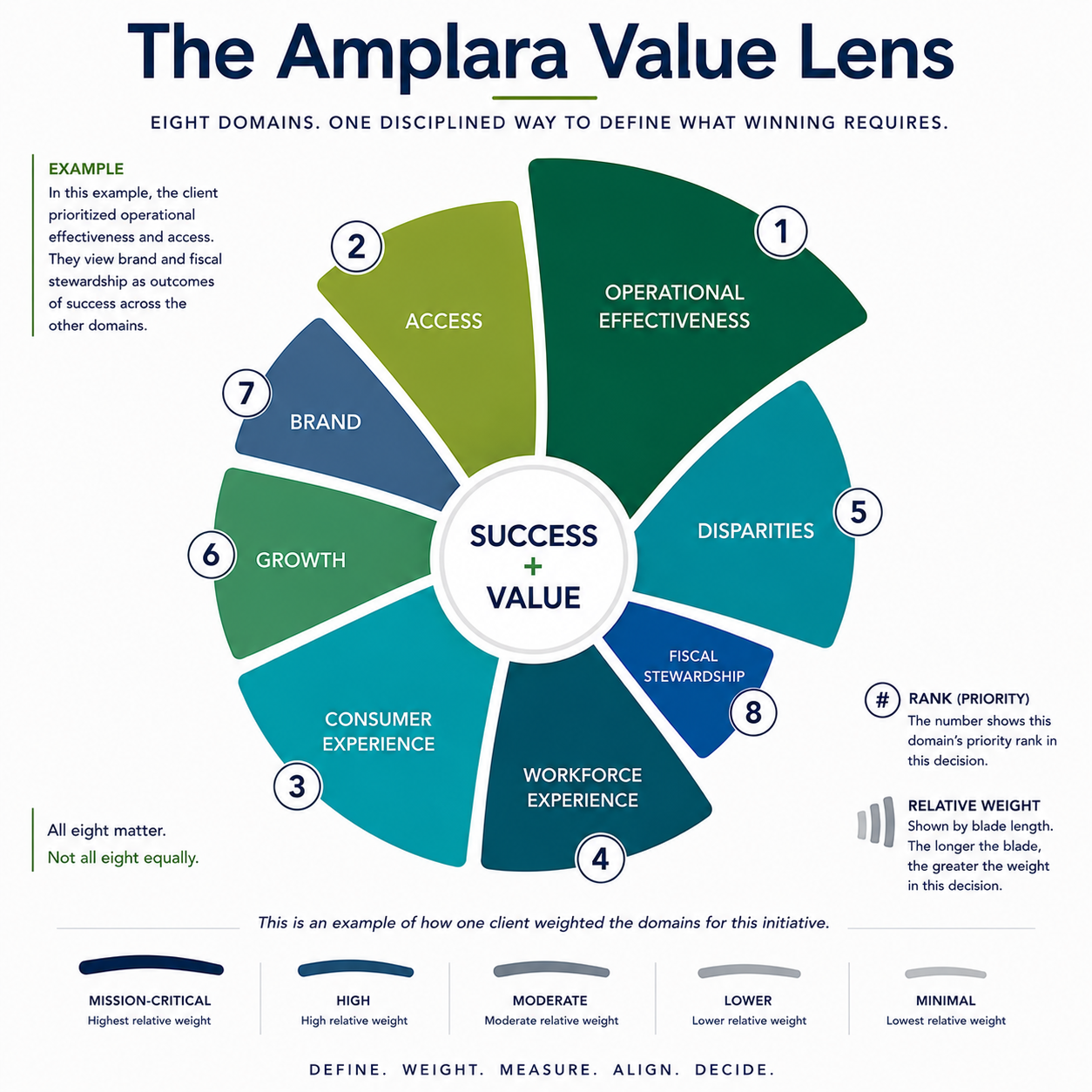
We are not outsiders to the design industry.
Amplara Advisor’s leadership has spent years working both inside architecture firms and alongside healthcare design teams on projects ranging from ambulatory facilities to complex academic medical centers and international hospital developments.
Most importantly, we understand how to bridge the gap between what healthcare organizations say they want and what is actually operationally sustainable, financially viable, and achievable in the real world.
We help design teams bring a deeper level of strategic, clinical, and operational thinking into the planning process without losing momentum, overcomplicating the work, or turning planning into an academic exercise.
Why design firms bring us in.
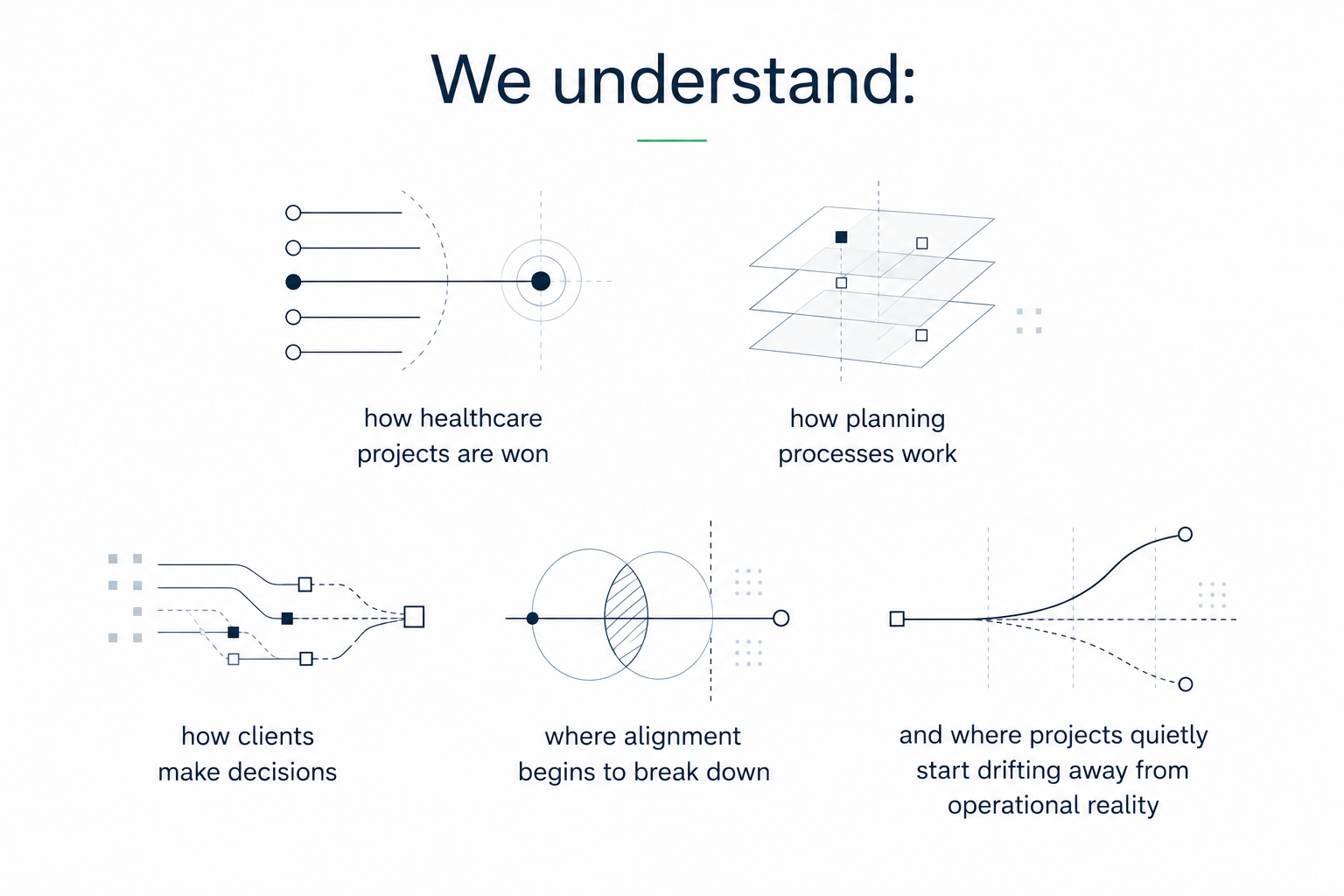
Amplara supports healthcare design firms by helping clients make better decisions before those decisions become buildings.
Because the best solution is not always the largest project.
Sometimes the most valuable outcome is helping clients avoid solving the wrong problem.
What we help design teams solve.
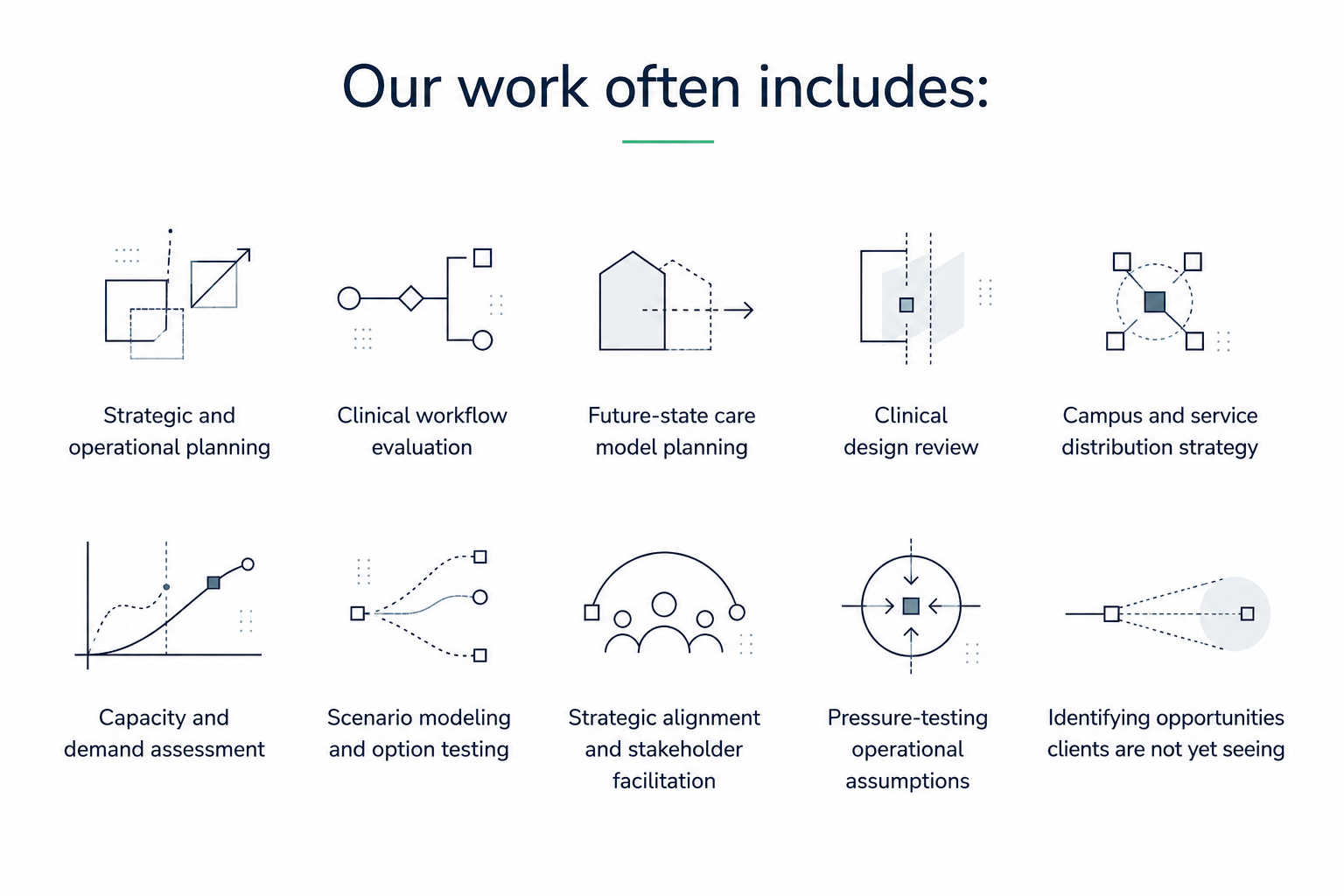
Selected Examples

Identifying the Opportunity No One Was Planning For
A regional health system initially asked for help rationalizing services across a newly expanded network of hospitals, ambulatory sites, and a freestanding emergency department.
Amplara Advisors’s analysis revealed something larger: a fast-growing market, a major access gap, capacity pressure at the main campus, and a competitive risk the client had not fully recognized.
The result was not just a better master plan. It was the identification of a new greenfield hospital opportunity that became strategically central to the system’s future in the region.
For the design team, this shifted the engagement from organizing existing assets to helping the client pursue a major capital project they had not yet placed on the table. The $300 million new facility is scheduled to welcome its first patient in 2027.
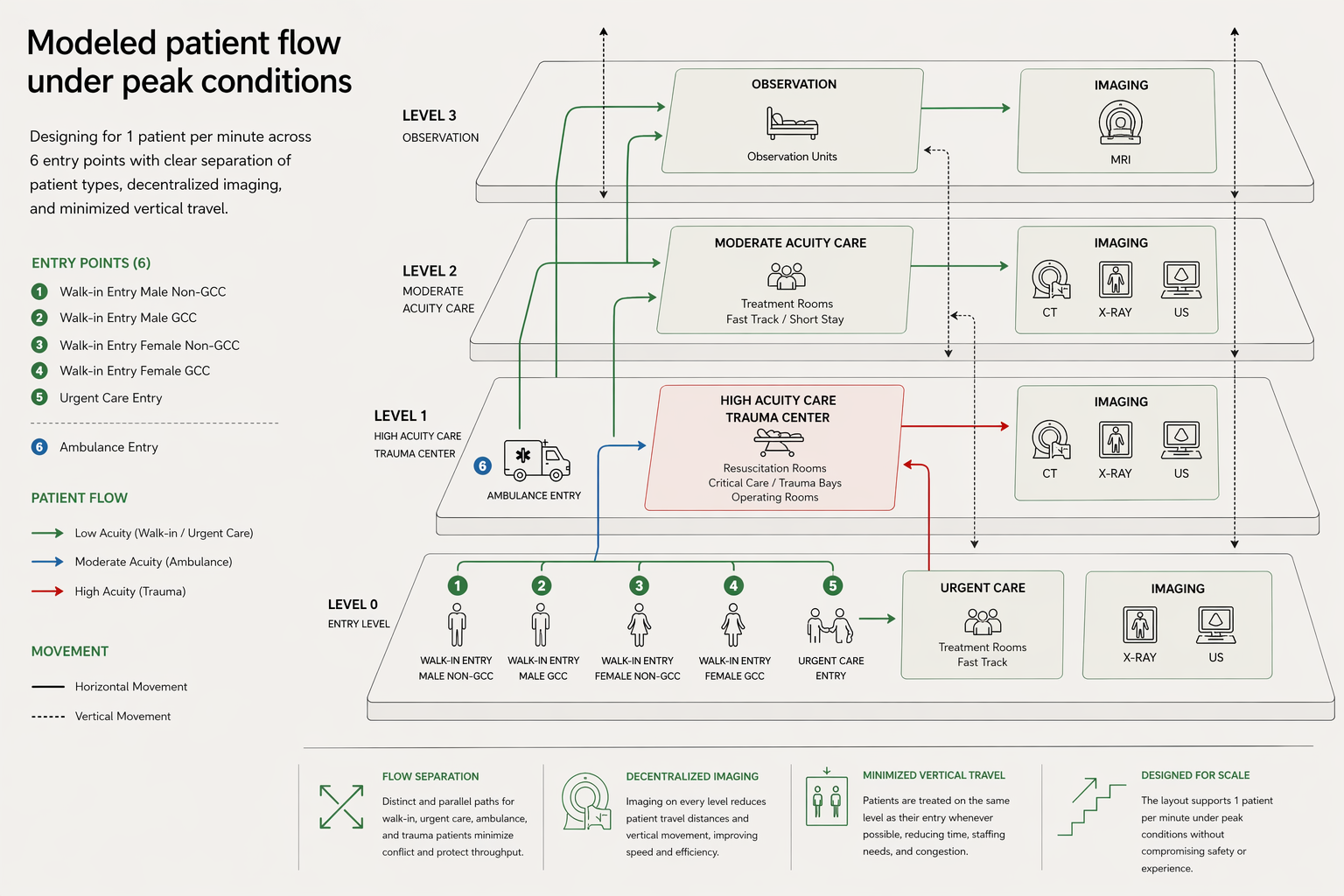
Translating Clinical Ambition into an Operationally Viable Emergency Department
A major academic medical center in the Middle East was planning one of the world’s largest and highest-volume emergency departments as part of preparation for a near doubling of population in the region over the next 20 years.
The challenge was not simply designing a larger emergency department. It was ensuring that the operational model driving the design could realistically function at the scale the organization was projecting.
Amplara Advisors worked alongside the design team and clinical leadership to pressure-test assumptions around patient flow, throughput, staffing, acuity distribution, operational adjacencies, and future demand. Acting as a bridge between the clinical stakeholders and the design team, Amplara Advisors helped translate clinical ambitions into an operationally sustainable model that could support both the projected volume and the realities of day-to-day care delivery.
The result was not simply a better facility design. It was a more resilient operational strategy capable of supporting one of the busiest emergency care environments in the region. The new Emergency Department and Trauma Center welcomed its first patients in 2022.
Complex healthcare projects require more than traditional planning alone.
The most valuable opportunities are often the ones clients are not yet asking about.
If your team is working through a healthcare project with meaningful strategic, operational, clinical, or market complexity, Amplara can help uncover the questions, risks, and opportunities that shape whether the project ultimately succeeds.