
Enterprise + Campus Master Planning
Most master plans start in the wrong place. They start with buildings. Beds. Volumes. Square footage. Cost estimates.
But facilities are not the strategy. They are the consequence of it. They are where patients experience care and where the workforce is asked to deliver it.
Before you decide what to build, where to build it, or how much to spend, you need to answer a harder question:
What kind of system are you trying to become for the people you serve and the teams who deliver that care?
We help health systems make that decision.
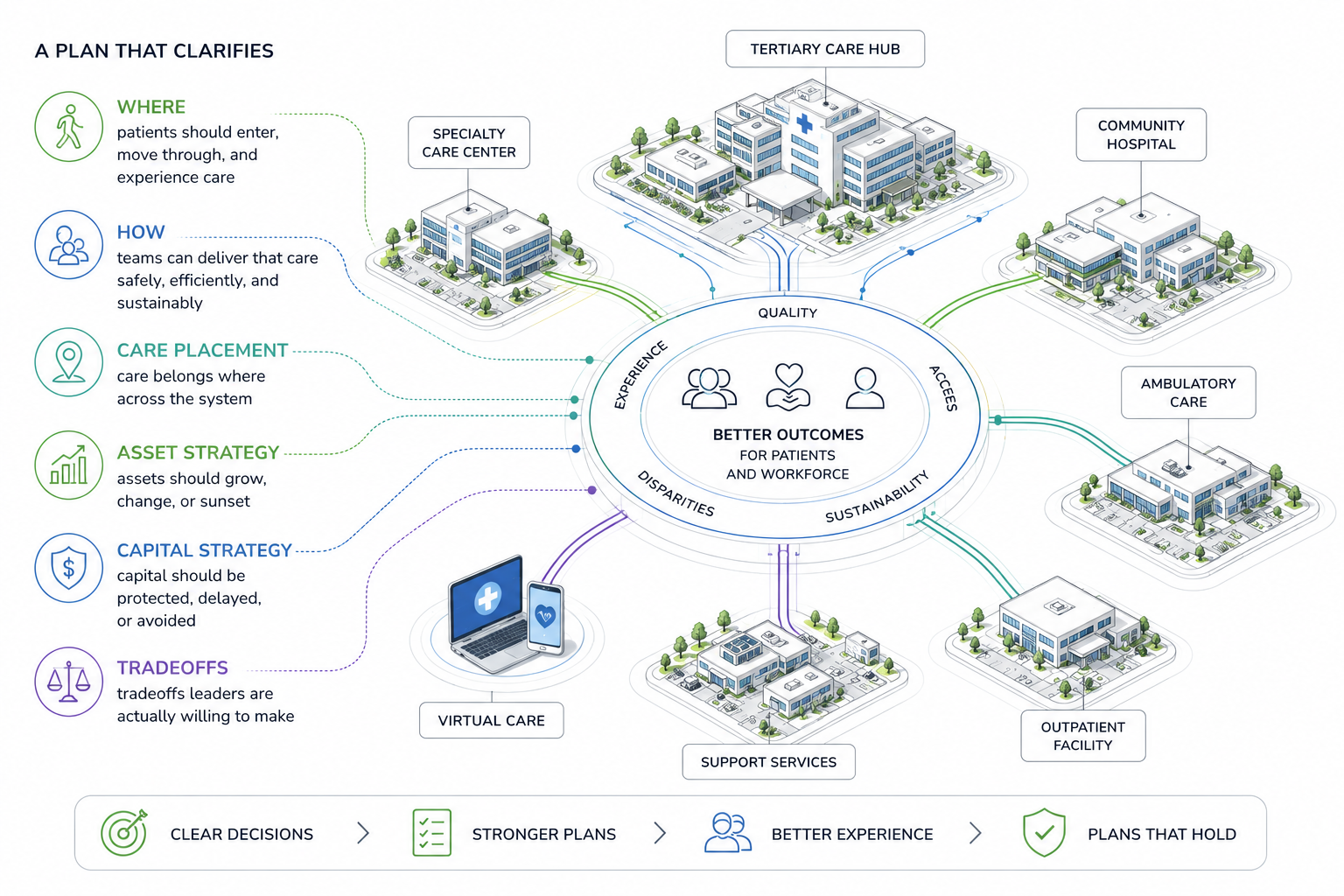
Campus and enterprise master planning should not be a translation of volume into space.
It should clarify:
Where patients should enter, move through, and experience care
How teams can deliver that care safely, efficiently, and sustainably
What care belongs where across the system
Which assets should grow, change, or sunset
What capital should be protected, delayed, or avoided
What tradeoffs leaders are actually willing to make
Because if those decisions are not clear, the experience breaks down, for patients and for the workforce, and the plan will not hold.
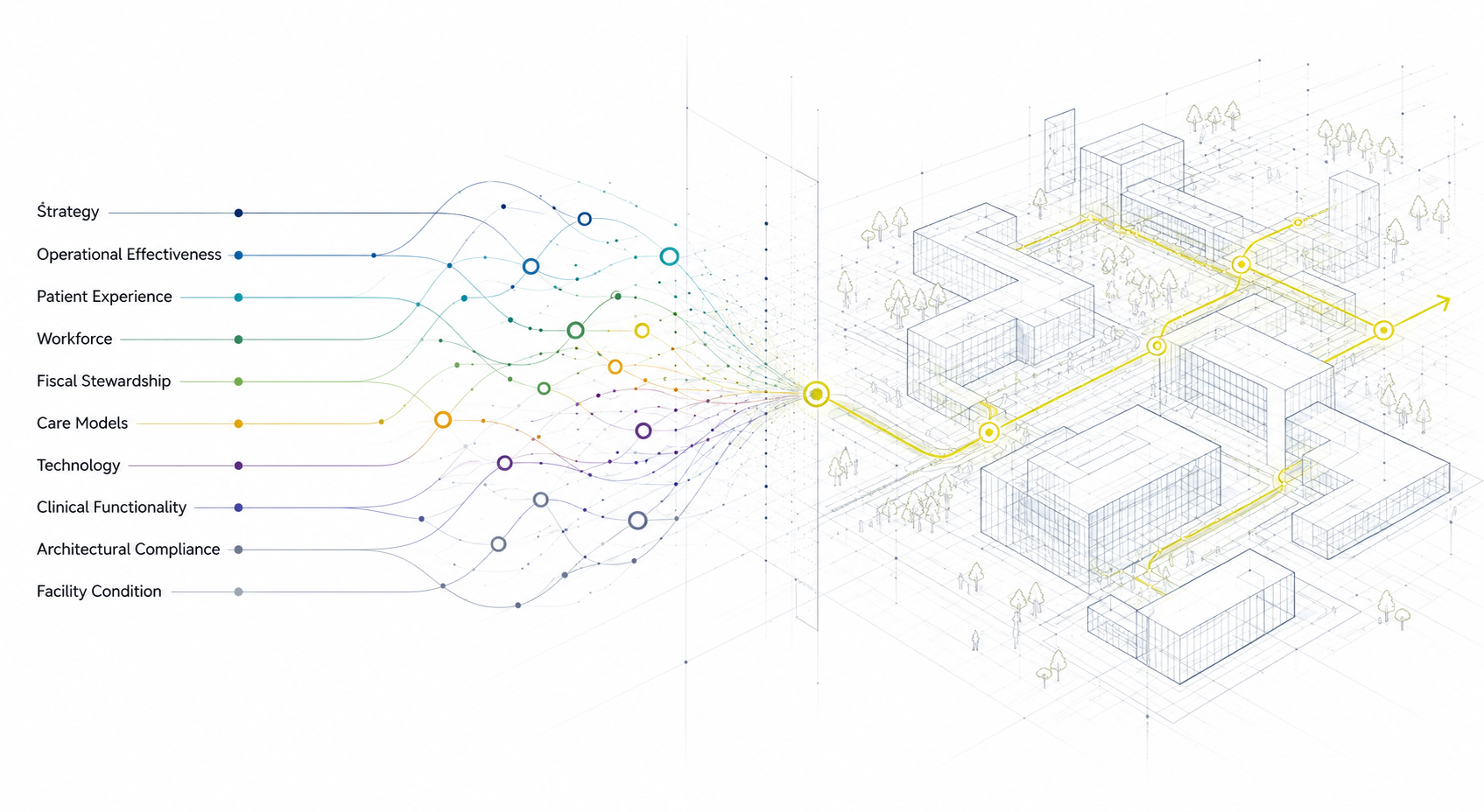
We diagnose the system before we plan the space.
That means looking at strategy, operations, access, experience, workforce, infrastructure, and capital together, not as separate workstreams.
We pressure-test decisions across three lenses:
Architecture
Do the spaces meet current standards and requirements?
Clinical functionality
Can teams deliver high-quality, safe, contemporary care in the space?
Facility condition
What infrastructure risks will undermine care delivery if not addressed?
Our approach is different.
We work alongside design teams, not around them, helping clarify the strategic, operational, clinical, and experiential assumptions the design must support.
We work alongside design teams, not around them, helping clarify the strategic, operational, clinical, and experiential assumptions the design must support.
Built around reality.
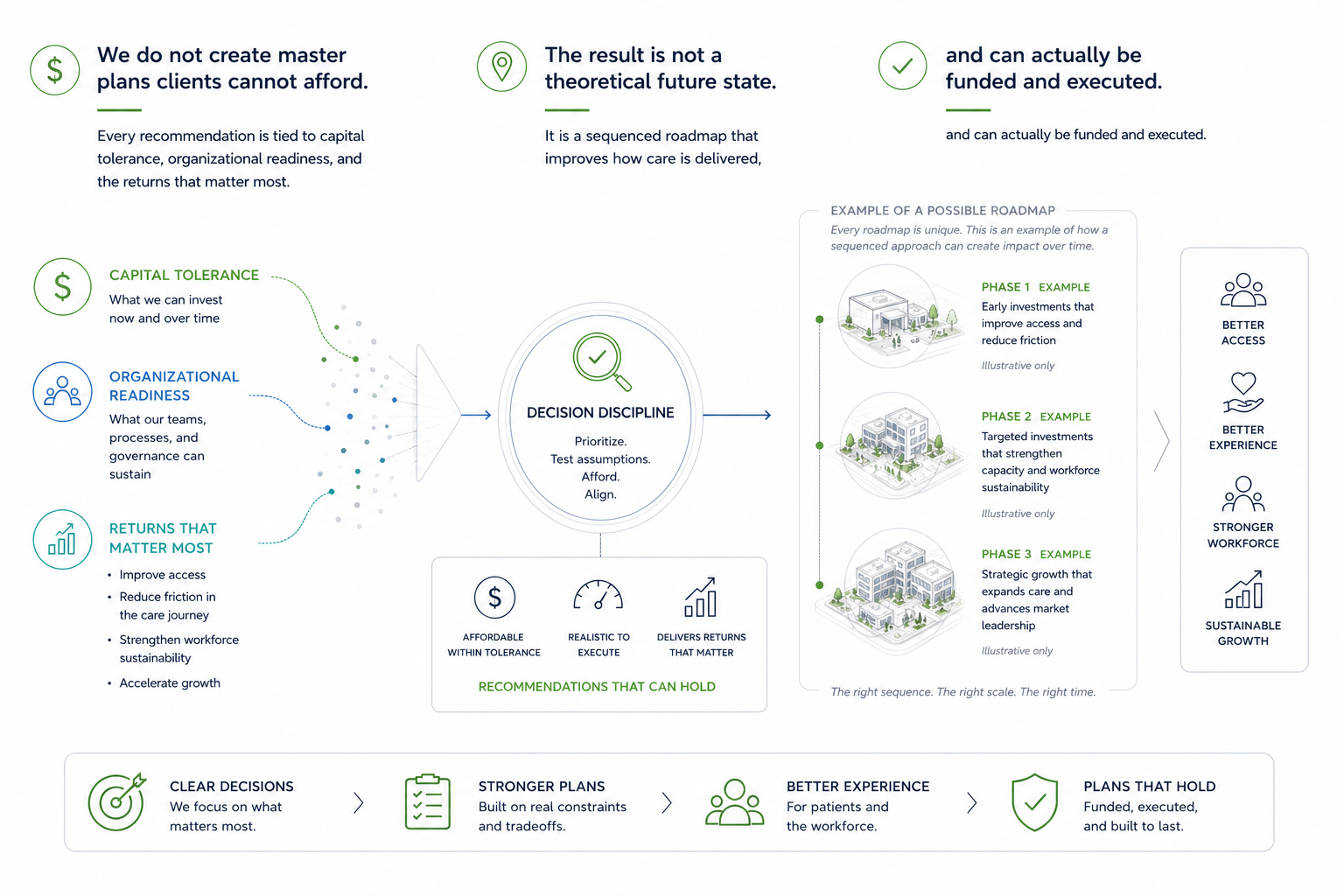
We do not create master plans clients cannot afford.
Every recommendation is tied to capital tolerance, organizational readiness, and the returns that matters most, whether that is improving access, reducing friction in the care journey, strengthening workforce sustainability, or accelerating growth.
The result is not a theoretical future state. It is a sequenced roadmap that improves how care is delivered, and can actually be funded and executed.
Before you decide what to build or where to invest,
get clear on what actually matters.