
ACCESS + EXPERIENCE
What patients experience is shaped by how care is organized and delivered.
Long waits. Difficult scheduling. Confusing handoffs. Incomplete or missing information. Unnecessary movement. Last-minute cancellations.
Patients feel the consequences. The causes often sit in workflow, staffing, technology, communication, space, or the way different parts of the organization work together.
Amplara Advisors helps identify what is creating the friction and what needs to change.
The goal is not simply a better experience.
It is a more effective care system.
Experience and operations are not separate problems. Improving one part of the journey can create problems somewhere else.
We look across access, workflow, workforce, technology, communication, and the physical environment to understand those connections and improve the system as a whole.
The difference shows up in the outcomes.
Confidential NCI-Designated Comprehensive Cancer Center | Western U.S.
The challenge was to create more capacity without adding space while asking less of patients already carrying a heavy burden.
The ambulatory clinics of an NCI-designated Comprehensive Cancer Center needed to accommodate more patients within their existing footprint.
At the same time, the patient journey was difficult.
Patients encountered queues, moved between multiple clinics, and could travel more than a mile during a single visit. Some appointments were cancelled within 24 hours of the scheduled time, even when patients were traveling several hours for care.
Capacity and experience were not separate problems. They were being produced by the same system.
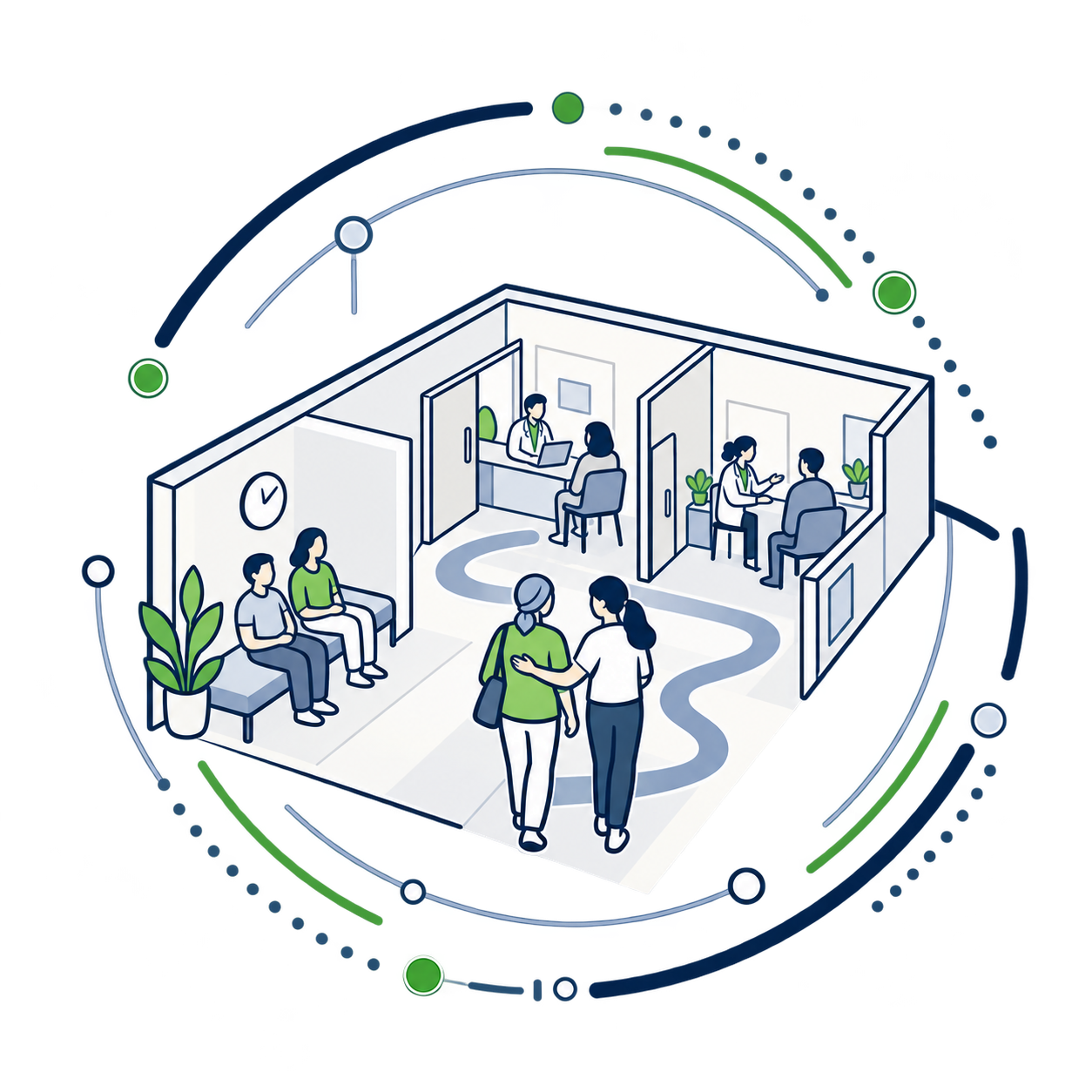

Understanding what was actually happening
Reliable throughput data were limited. The team conducted manual time-stamp analysis to reconstruct where patients were waiting, moving, and receiving care across the ambulatory journey.
That analysis exposed bottlenecks and variation that the existing reports could not reveal.
The redesign
Scheduling, clinic workflows, resource utilization, handoffs, and patient movement were examined as one system.
The resulting changes created more capacity within the existing footprint while reducing the time patients spent waiting and navigating care.
The results…
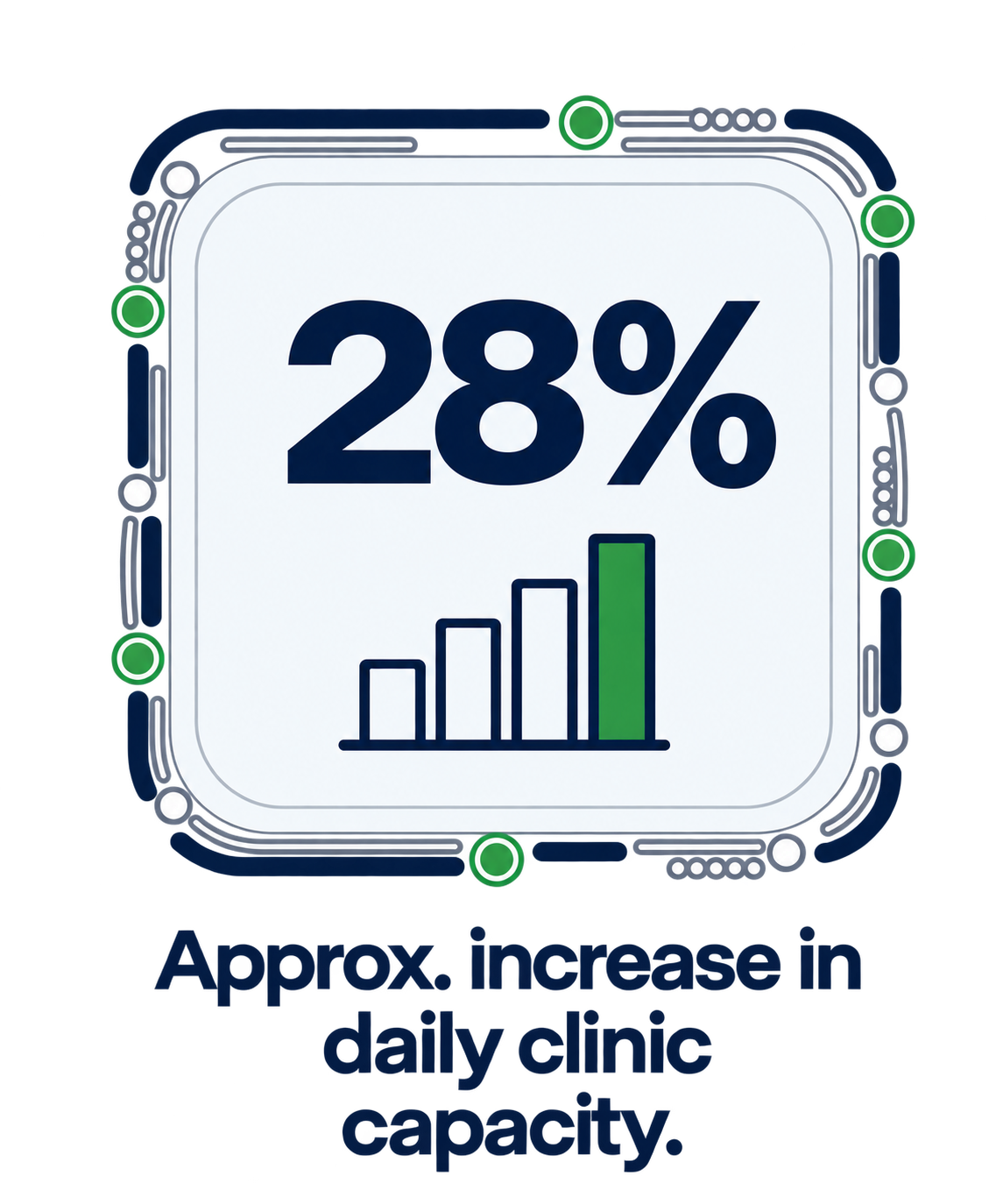
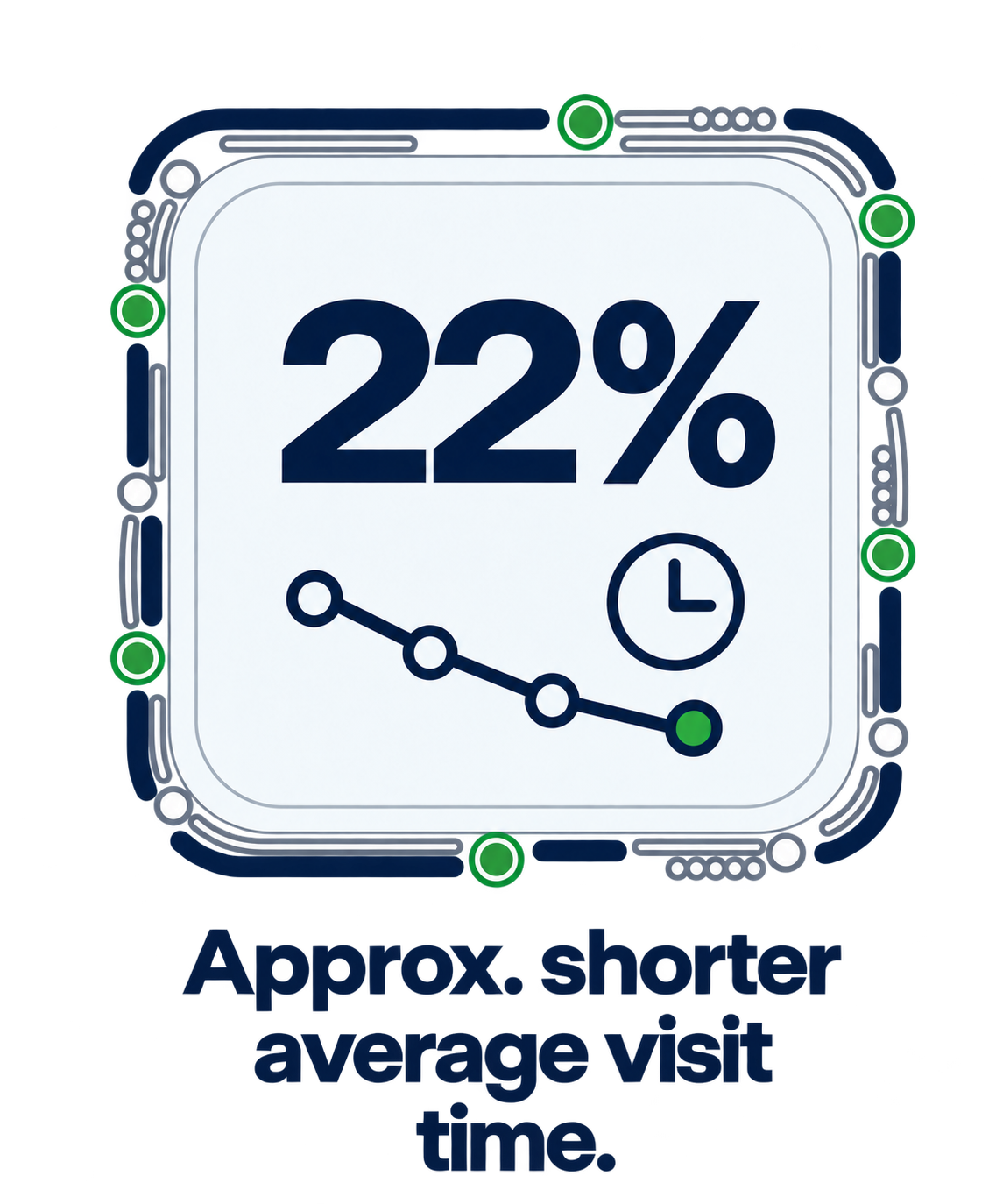
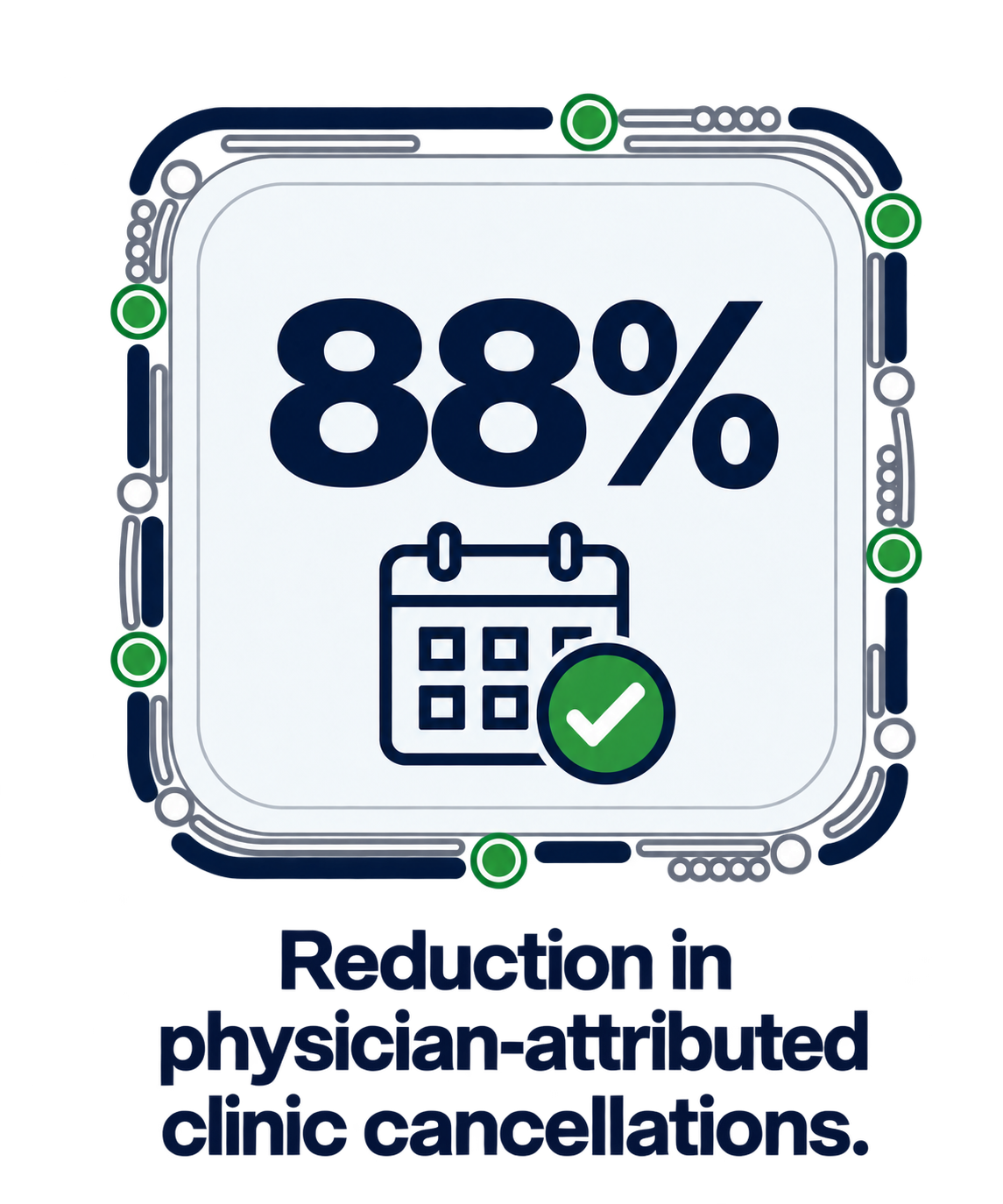
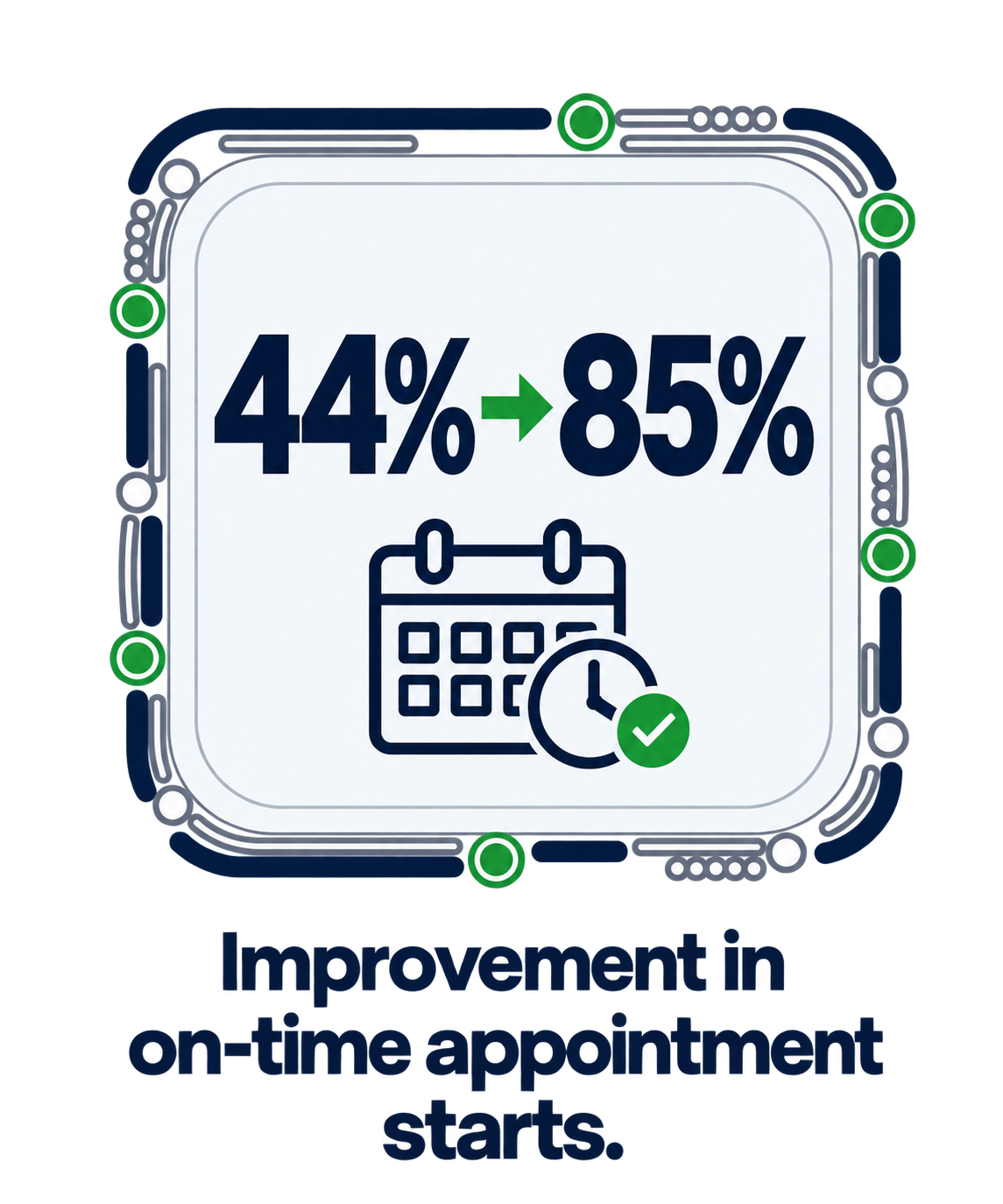
The organization was able to serve substantially more patients without adding space while reducing the time, uncertainty, and disruption patients experienced during their care.