
ENTERPRISE + CAMPUS MASTER PLANNING
What kind of system are you trying to become?
A master plan should answer more than where to build, renovate, or expand.
It should clarify how the organization intends to grow, where care should be delivered, what role each campus should play, and which investments matter most.
Amplara Advisors connects those decisions before they are translated into facilities.
Facilities are not the strategy. They are the consequence of it.
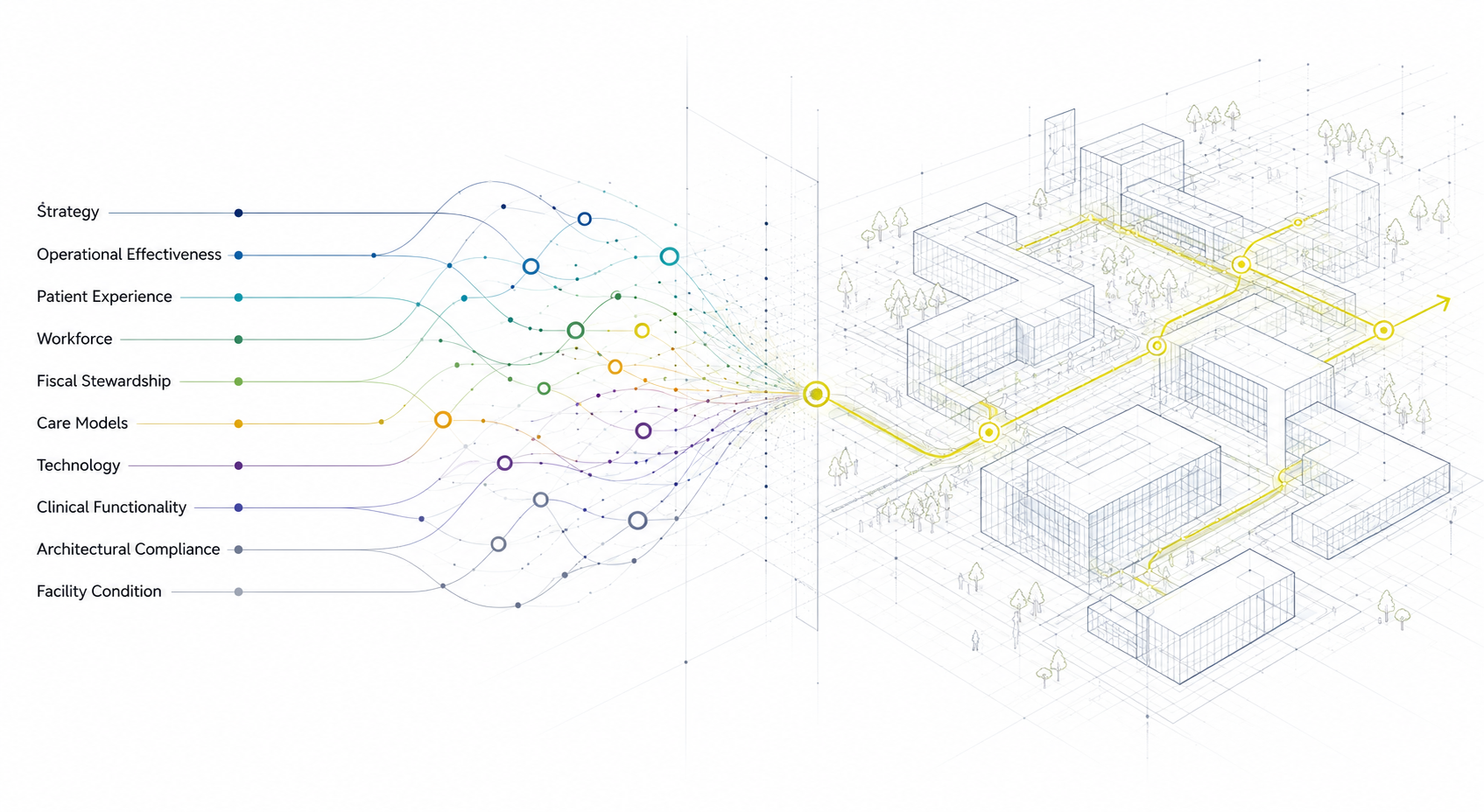
Growth, access, workforce, care models, capacity, technology, legacy assets, and capital constraints all shape what the physical environment should become.
We connect those factors to the decisions leaders ultimately need to make about site roles, service distribution, phasing, legacy assets, and capital priorities.
The goal is a plan leaders can fund, defend, sequence, and act on.
The difference shows up in the outcomes.
Confidential Tertiary Teaching Health System | Southeastern U.S.
The campuses were carrying the consequences of decisions the system had not yet made.
A multi-campus tertiary teaching health system was preparing for its next phase of growth, but the issues shaping its future extended well beyond aging facilities.
Leadership had not fully aligned around what success meant at the enterprise level. Long-range strategic planning was still evolving. Data reliability complicated some planning assumptions. Access, consumer experience, operational effectiveness, infrastructure deterioration, and legacy facilities were all influencing what the future system needed to become.
The planning challenge was therefore not simply what to build.
It was what kind of system the organization needed to become, what role each campus should play in that future, and how capital investment should follow those decisions.


The work
The planning process integrated strategic priorities, demand forecasts, operational assumptions, site-of-service decisions, capacity requirements, and capital constraints before moving into architectural concepts.
Customized demand projections and operational assumptions were used to test future room and space needs. Alternative campus scenarios were evaluated against strategic priorities, service distribution, throughput, access, and capital implications.
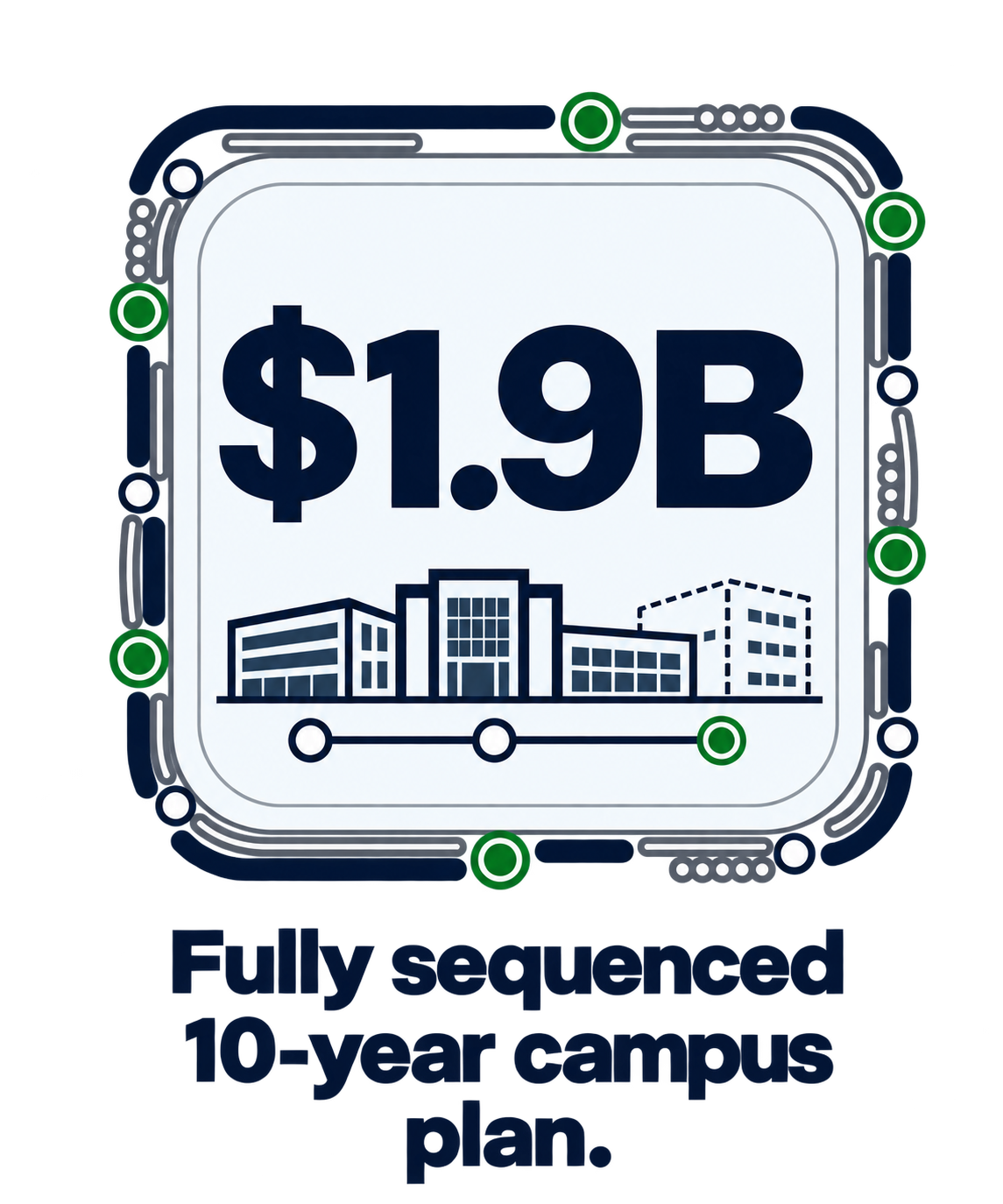
The result was a $1.9 billion, 10-year campus plan that translated enterprise strategy into a sequenced investment path across the health system.
The results…
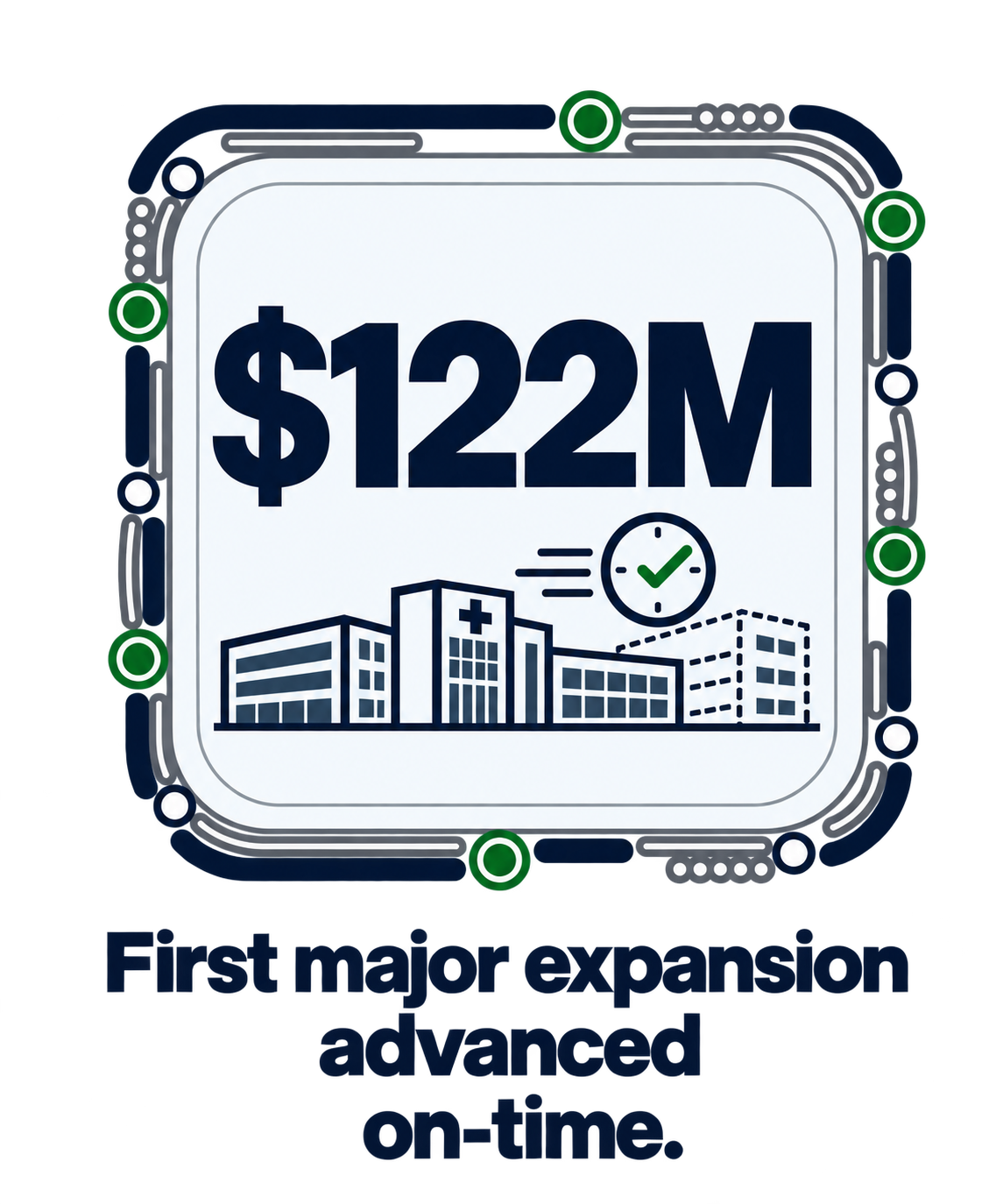
The $122 million expansion represented the first major project in a much larger system transformation, demonstrating that the master plan was not simply a vision for the future. It created a path leadership could begin acting on.