
BIG HAIRY CHALLENGES
How do we solve the problem we keep avoiding?
Some healthcare problems refuse to stay in one lane.
They cross strategy, operations, clinical care, workforce, finance, experience, and facilities. Different leaders see different parts of the problem. Success means different things to different stakeholders. Every credible option creates consequences somewhere else.
Amplara Advisors helps leaders define the real problem, make the trade-offs visible, and create enough alignment to move forward.
Complex problems rarely suffer from a lack of attention.
They suffer from fragmentation.
Different teams study different pieces. Meetings generate activity. Data accumulate. Recommendations multiply. But no one is holding the entire problem together. The result can be a great deal of work without resolution.
The goal is not consensus. It is enough alignment to make a consequential decision and act on it.
The difference shows up in the outcomes.
Confidential State-Owned Behavioral Health System | Southern U.S.
The problem was much bigger than the state hospitals.
A statewide behavioral health system was facing deteriorating facilities, high inpatient occupancy, uneven access, workforce constraints, fragmented services, and poor coordination across state hospitals, community providers, substance-use and addiction services, criminal justice, and the broader medical system.
At the time, state psychiatric hospitals operated more than 2,500 beds, many at occupancy levels above 90%. Rural communities often lacked convenient access to acute assessment and stabilization, placing additional pressure on emergency departments and law enforcement.
The visible question
What should be done about an aging state hospital system?
The real question
What should the statewide behavioral health system become, where should different kinds of care be delivered, and what resources would be required to make that future possible?


The work
The planning effort integrated inpatient capacity, community-based services, geographic access, workforce, care models, facility conditions, and the relationship between behavioral health, medical care, substance-use and addiction services, and the criminal justice system.
Rather than treating hospital replacement as the answer, the work established a long-range framework built around providing the right care, in the right place, at the right time, with the right resources.
The resulting recommendations called for a substantial expansion and modernization of state-operated capacity, additional inpatient capacity through community hospital partnerships, and a broader shift toward a more integrated continuum of behavioral health care.
The results…
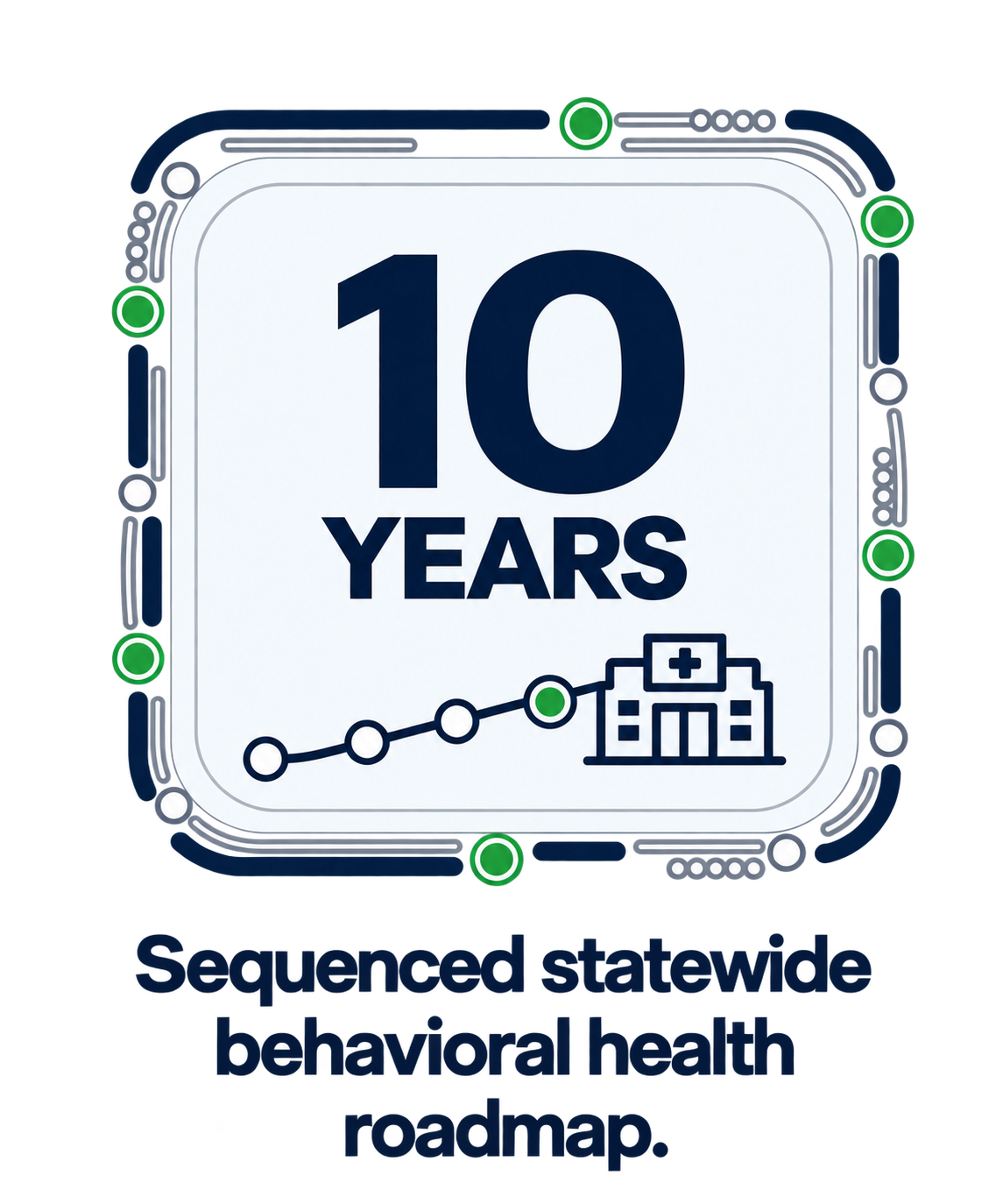
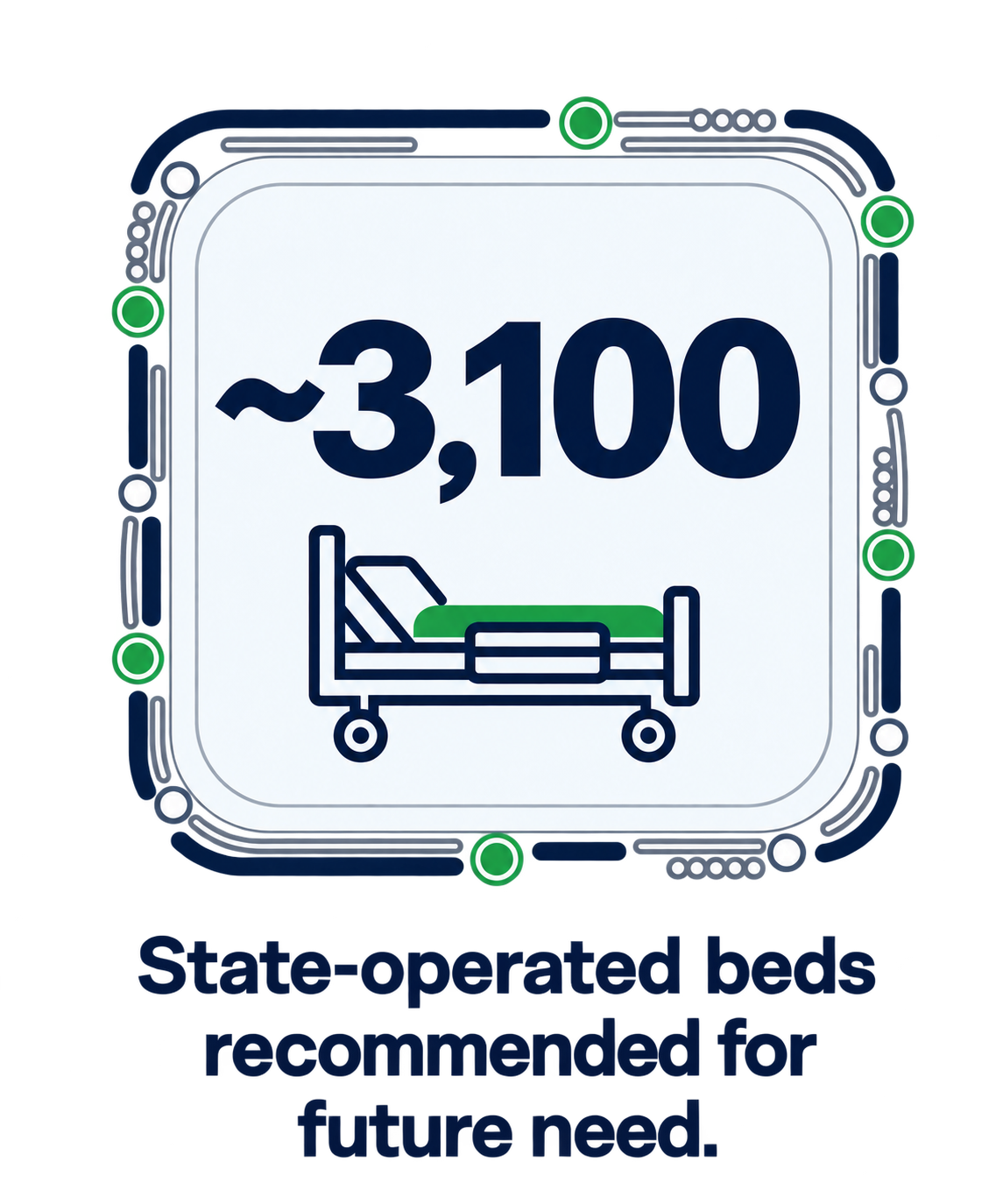
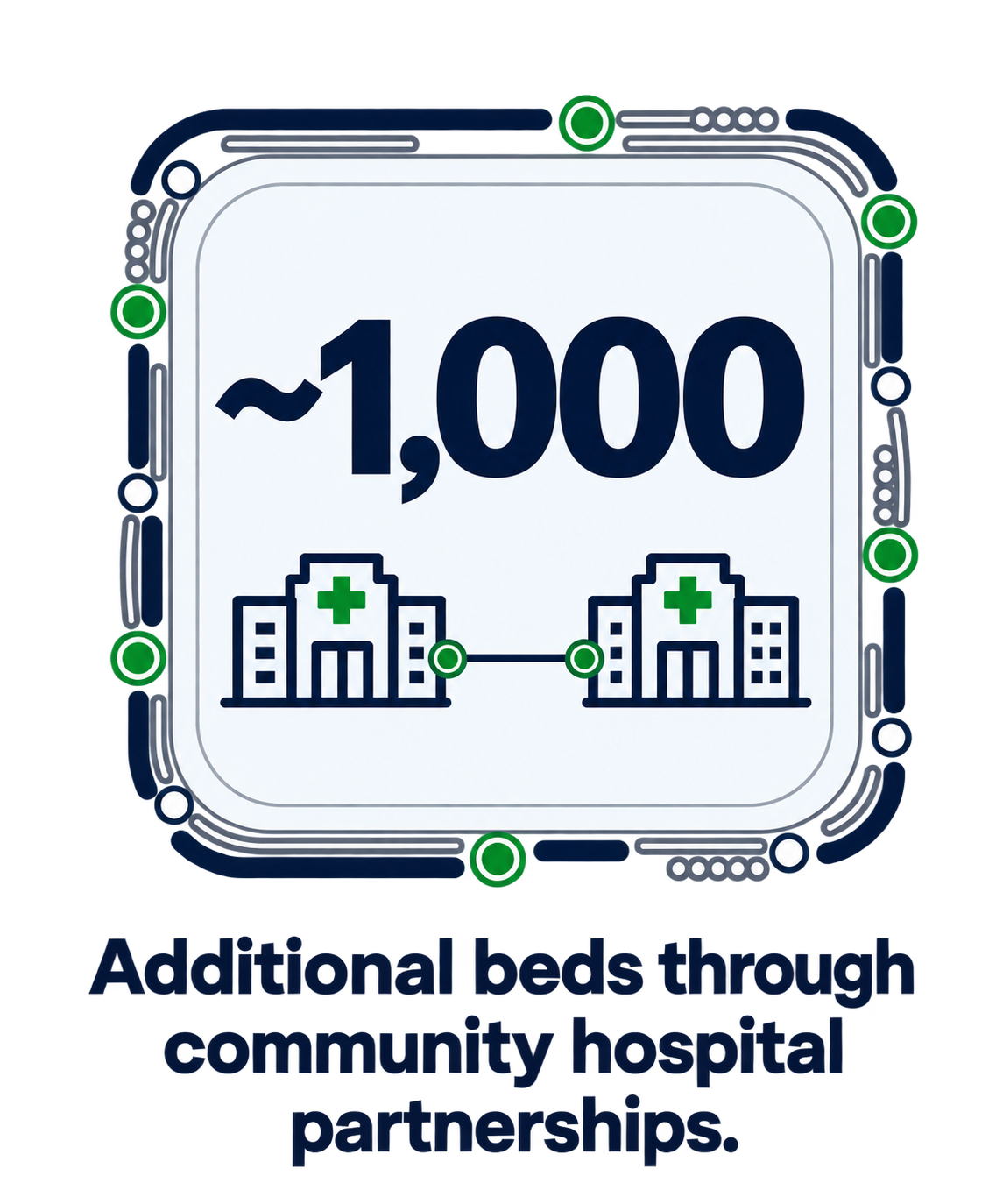

The roadmap helped establish the strategic and capital direction for a statewide modernization effort that has since included replacement and greenfield psychiatric hospitals serving adult, pediatric, and forensic populations.